
Campanie
General Information:
Strategic approach:
| Strategic approach: |
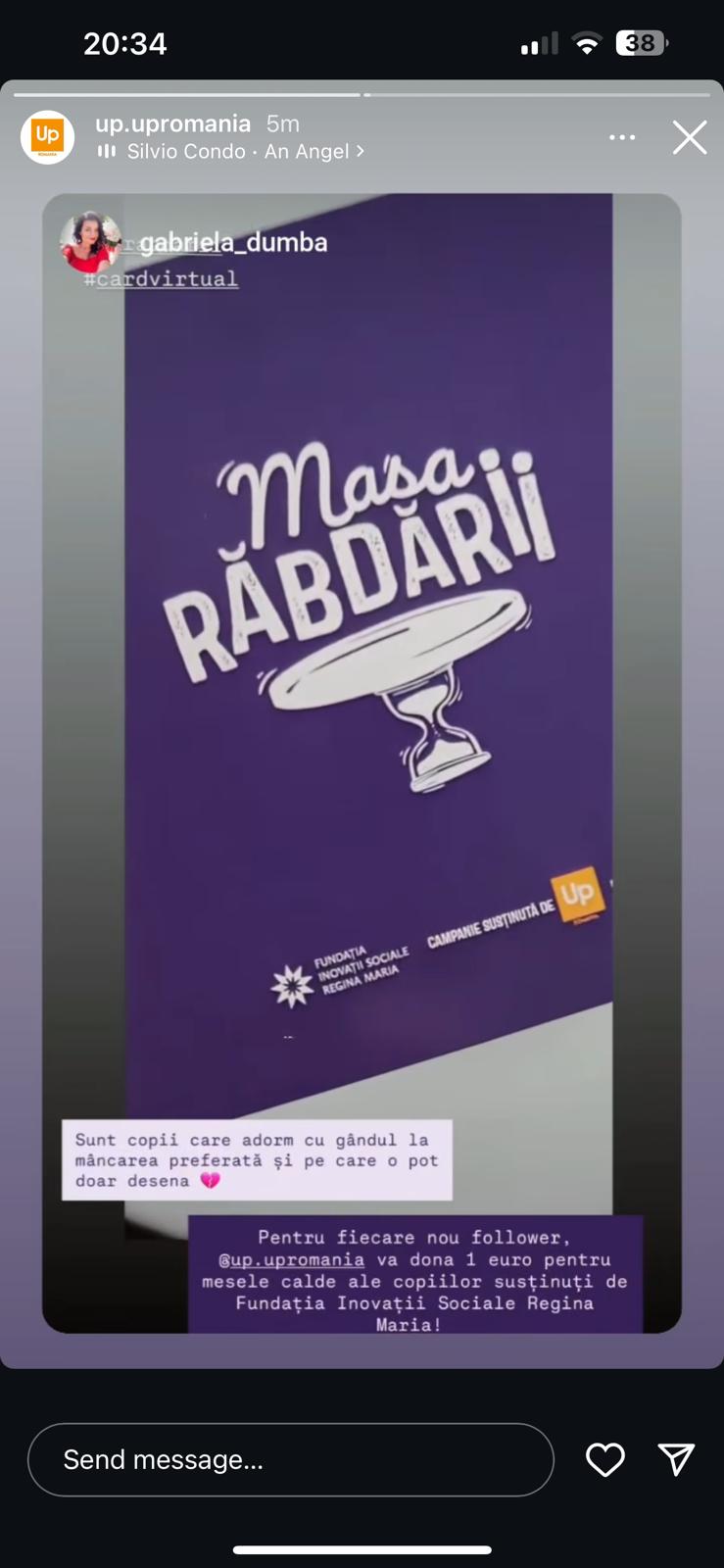
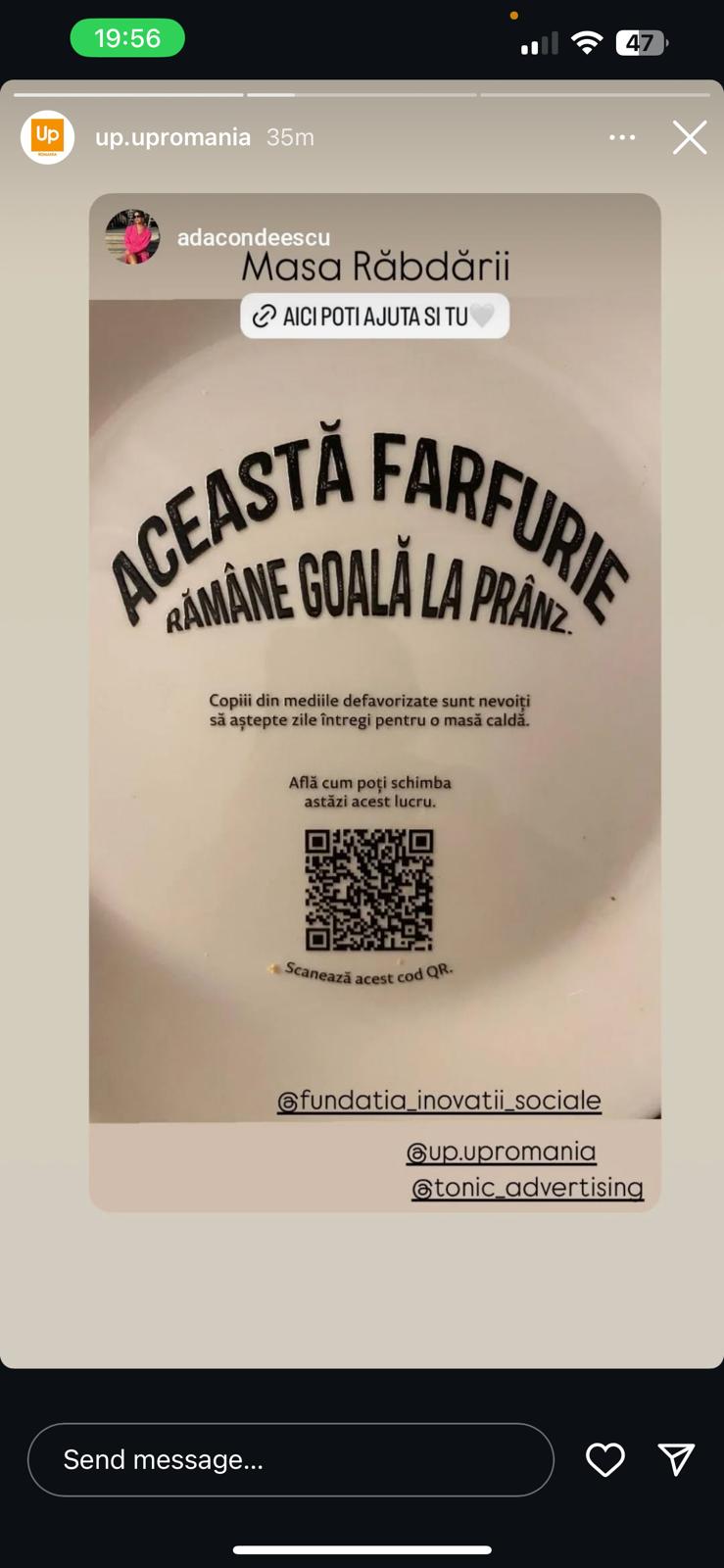
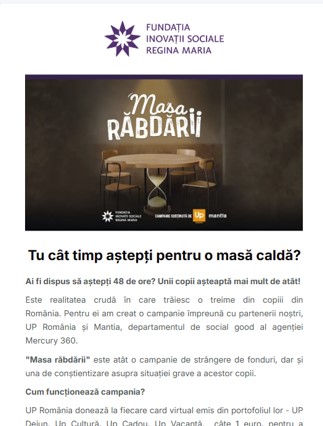
CONTEXT Despite Romania’s economic growth, 1 in 3 children still face poverty, sometimes waiting up to 48 hours for a warm meal. With little government support, foundations and NGOs bear the burden. For over 12 years, the Regina Maria Social Innovations Foundation has provided meals to vulnerable children. But in 2023, they could only secure 73,000 meals—forcing children to go to sleep hungry for nearly three months. CHALLENGES In 2024, with an average inflation of 7%, companies and individuals became more cautious, but hunger didn’t wait. 1) Unstable funding in an unpredictable economy In an unstable economy, even the most loyal donors began giving less. The foundation needed a consistent, long-term funding source - one that wouldn’t be affected by economic downturns or shifting social priorities. Traditional donations became increasingly unreliable, with public trust in NGOs stagnating at around 50% in recent years. At the same time, people were experiencing "donation fatigue," becoming desensitized to continuous fundraising appeals. 2) Convincing companies to support a social cause at no extra cost With shrinking CSR budgets and rising layoffs, many companies were hesitant to fund social causes, prioritizing initiatives with immediate business returns. The foundation had to create a sustainable funding model—one that wouldn’t strain companies financially while still ensuring a steady food supply for children in need. OBJECTIVES 1️) Establishing a Long-Term Partnership Develop a sustainable and scalable partnership that ensures consistent funding for the Foundation while expanding its reach to new potential donors. 2) Increasing Monthly Donations Achieve a 10% growth in monthly donations dedicated to providing hot meals, overcoming the stagnation of previous years. 3) Raising Awareness on Child Malnutrition Highlight the critical issue of child malnutrition in Romania, which directly impacts the future of vulnerable children. The contrast is stark—while many people feel frustrated when their meal is delayed, children in disadvantaged communities wait without complaint, sometimes even skipping school due to a lack of necessities. 4) Maximizing Earned Media and Pro Bono Contributions With no dedicated media budget, the campaign relied solely on emotional engagement and pro bono support—a common reality for nonprofits in Romania. Our goal was to generate significant visibility and media exposure without additional costs, ensuring that resources remained focused on the cause. AUDIENCE In the past, we relied on individual donations and tax redirection to fund our mission. However, to create a sustainable, long-term impact, we had to expand our strategy. We focused on a direct approach to companies, targeting decision-makers—from HR managers and procurement teams, who handle operational choices, to executives, who could ensure a long-term commitment rather than just a one-time tax redirection. STRATEGY This was not a traditional solution. Instead of simply asking for donations, the foundation forged a strategic partnership with a dual impact, bringing together two different worlds: UP Romania, the country's largest meal ticket provider, which ensures daily meals for employees, and the foundation, which fights to feed vulnerable children. How did we do this? By creating a smart mechanism that not only provides meals for employees but also secures food for children in need—addressing both needs simultaneously. • UP Romania needed to transition employees from physical to virtual meal cards—a non-mandatory but more sustainable shift. • The Foundation needed consistent funding to provide meals for children. The solution? 1 virtual card issued = 1 euro donated. 5 cards = 1 meal for a child in need. This partnership model set a precedent in the industry, proving that sustainability and digitalization can drive social impact. |
Execution:
| Images: |
|
| Video Link: |
